February 10, 2026
Person in VR headset interacting with glowing digital network interface in futuristic blue-pink lighting

Metaverse in 2025: Is the Future Still Alive?

There was a time when the word metaverse was everywhere. Tech magazines, conferences, content creators — everyone believed it would change everything. It was described as the “next internet” and the future of how we would live, communicate, and work.

But slowly, the hype faded.

Crypto collapsed, VR headsets sales slowed down, and many companies shifted their marketing direction. People started questioning:

👉 Did the metaverse fail, or is it quietly evolving?

In 2025, the conversation has returned — but with more maturity, less hype, and more evidence. So now, the real question is:


What Does the Metaverse in 2025 Really Mean?

Earlier, the metaverse was imagined as one giant virtual world. But today, the definition is more grounded:

“The Metaverse in 2025 is a network of immersive digital environments connected through VR, AR, AI, and digital identity systems.”

Instead of one universe, it is now a collection of connected virtual experiences.

Person in VR headset interacting with 3D cityscape and architectural blueprint in immersive digital workspace

What Changed Since the First Metaverse Hype?

At first, people expected instant transformation. When that didn’t happen, many assumed the metaverse died.

But instead of disappearing, it began reshaping itself.

The Hype Cycle Collapsed

Every technology goes through a pattern: hype → disappointment → adoption.

The metaverse entered the disappointment phase around 2023.

The Technology Needed Time

Earlier challenges like high VR prices, unstable blockchain systems, and slow internet speeds made adoption difficult.

By 2025, however, things improved:

  • Faster 5G/6G networks

  • Standardized digital identities

  • Better standalone VR/AR headsets

  • AI-powered immersive experiences

metaverse-virtual-city

Who Is Still Building the Metaverse in 2025?

Even though public hype slowed, major companies continued development.

Company Contribution
Meta VR ecosystems & Horizon Worlds
Apple VisionOS & spatial computing
Microsoft Mixed reality workspaces
Roblox Digital social ecosystems
Nvidia Industrial digital twins
Epic Games Unreal Engine immersive systems

👉 If these companies are still investing — the metaverse isn’t going anywhere.

Logos of Microsoft, Amazon, Apple, Google, and Meta over glowing digital background representing Metaverse technology leaders

Where Is the Metaverse in 2025 Being Used?

Surprisingly, the metaverse today isn’t primarily about gaming — it’s about utility.

Workplace & Remote Collaboration

Digital offices and hybrid meetings are becoming normal.

Education & Skill Development

Students and professionals are training using VR-based learning.

Digital Commerce

Virtual fashion, NFT memberships, and 3D shopping now exist across platforms.

Virtual meeting room with avatar characters seated around table, digital screens showing data, and presentation setup

Challenges the Metaverse Still Faces

Even with progress, several issues remain:

  • Interoperability

  • Privacy concerns

  • Hardware adoption

  • Content quality

These must be solved before mainstream adoption becomes reality.

How AI Is Reshaping the Metaverse in 2025

AI is the missing piece early developers didn’t have.

Today AI enables:

  • Realistic digital humans

  • Automated world-building

  • Personalized environments

  • Real-time language translation

AI has become the engine powering the metaverse’s evolution.

AI role in metaverse technology

So… Is the Metaverse Still the Future?

The truth?

👉 The Metaverse in 2025 isn’t dead. It’s maturing.

Like smartphones, streaming, or AI — adoption takes time.

Instead of being a full replacement for the physical world, it is becoming:

  • A new digital workplace

  • A layer of immersive education

  • A global economic environment

  • A new identity and communication system

It’s no longer a fantasy — it’s a slow shift happening every day.

FAQs

Q1: Will everyone use the metaverse?
Not everyone — but parts of it will integrate into daily life.

Q2: Do you need VR to access the metaverse?
No — AR, mobile, desktop, and XR devices are also entry points.

Q3: Is the metaverse still worth investing in?
Yes — long-term growth is expected, especially in enterprise and education.

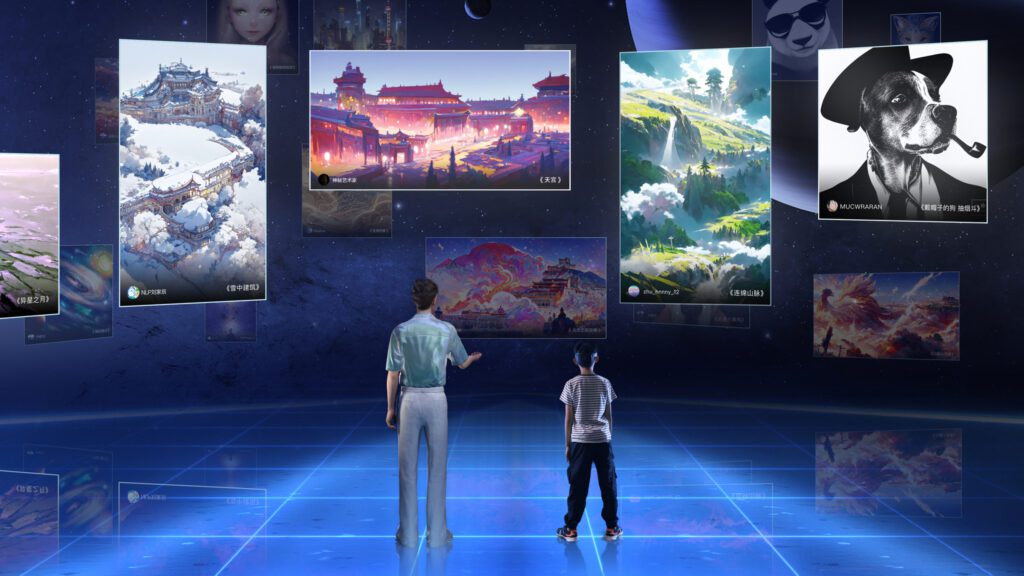
The future of the metaverse in 2025

Final Thoughts

The metaverse is not failing — it is transforming.

The hype is gone, and now the real work is happening.

Just like the internet in 1999, it is still misunderstood — but in a few years, it may be something we use without even realizing.

Leave a Reply

Your email address will not be published. Required fields are marked *